CUSTOMER SEGMENTATION
Many Communities.
One Mission.
Cherish These Words serves the people, families, professionals, and organizations who believe every individual deserves to be known, understood, and remembered for who they are. Our Identity Preservation Platform is designed to improve care, strengthen relationships, preserve dignity, and create lasting legacies across multiple industries.
OUR CORE PRINCIPLES
Know the Person
Understanding life stories, values, preferences, relationships, and experiences creates the foundation for meaningful care.
Strengthen Care
Personalized insights improve communication, reduce stress, increase trust, and lead to better outcomes.
Build Trust
Identity-centered care creates stronger relationships between families, caregivers, healthcare professionals, and organizations.
Preserve for Generations
Stories, wisdom, traditions, photographs, videos, and memories become lasting legacies for future generations.
OUR CUSTOMER SEGMENTS
FAMILIES
Preserve stories, memories, and traditions before they are forgotten. Create a legacy your family can cherish forever.
Who benefits:
Parents, children, siblings, grandchildren, extended family.
FAMILY CAREGIVERS
Gain insight into the person behind the diagnosis. Reduce stress and make caregiving more confident, personal, and meaningful.
Who benefits:
Spouses, adult children, relatives, and friends.
HOSPITALS & HEALTH SYSTEMS
Enhance person-centered care across the care continuum. Improve patient experience, communication, and care coordination.
Who benefits:
Patients, care teams, care managers, and administrators.
ASSISTED LIVING COMMUNITIES
Help residents feel known and valued. Staff can build stronger relationships and deliver care that reflects each resident’s life story.
Who benefits:
Residents, families, staff, and community leaders.
MEMORY CARE COMMUNITIES
Access life story and preference insights that support dementia care and reduce challenging behaviors through connection and familiarity.
Who benefits:
Residents, caregivers, therapists, and leadership.
HOME CARE PROVIDERS
Bring familiarity into every visit. Understand routines, preferences, and comfort strategies that improve care in the home.
Who benefits:
Care recipients, caregivers, family members.
HOSPICE & PALLIATIVE CARE
Preserve meaning, messages, and memories that bring comfort to families during the most important moments.
Who benefits:
Patients, families, and care teams.
INSURANCE COMPANIES
Offer members added value with identity preservation services that support aging, caregiving, and legacy planning.
Who benefits:
Policyholders, caregivers, and member services teams.
FUNERAL HOMES & MEMORIAL SERVICES
Extend care beyond the funeral. Provide families with a lasting tribute that preserves a lifetime of memories.
Who benefits:
Families, funeral directors, pre-planning clients.
ESTATE PLANNING ATTORNEYS
Complete the legacy plan by preserving the human story alongside financial and legal documents.
Who benefits:
Clients, families, and professional advisors.
VETERANS
Honor service, sacrifice, and life experiences. Preserve stories for future generations and historical legacy.
Who benefits:
Veterans and their families.
MILITARY FAMILIES
Maintain connection across deployments and distances. Preserve family stories and shared experiences.
Who benefits:
Military members and their families.
PET OWNERS (PET LEGACY)
Because pets are family too. Preserve the memories, photos, and stories of beloved companions.
Who benefits:
Pet owners and animal lovers.
NONPROFIT ORGANIZATIONS
Support communities through storytelling initiatives, caregiver programs, and legacy projects that create lasting impact.
Who benefits:
Communities, caregivers, program participants.
RESEARCH INSTITUTIONS & ACADEMIA
Advance evidence-based person-centered care and identity preservation through research collaboration.
Who benefits:
Researchers, students, and academic partners.
WHY THESE MARKETS MATTER
Several global trends continue to accelerate demand:
- Aging populations continue to expand worldwide.
- Dementia prevalence is increasing dramatically.
- Caregiver shortages place greater pressure on families and healthcare systems.
- Digital legacy expectations are becoming mainstream.
- Healthcare organizations are prioritizing personalized, relationship-centered care.
- Consumers increasingly value preserving memories before they are lost.
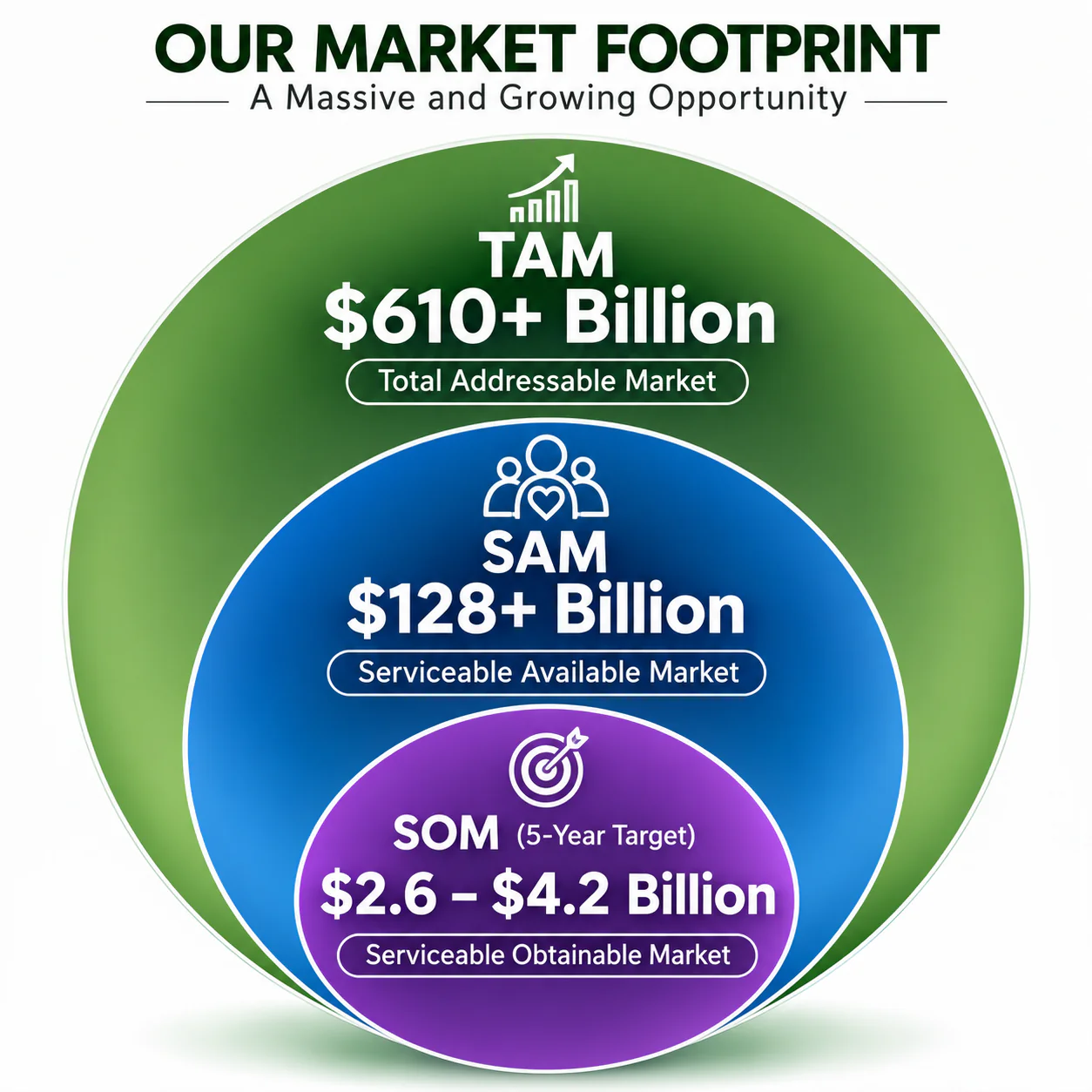
These trends create significant opportunities across both consumer and enterprise markets.

CROSS-INDUSTRY IMPACT
For Individuals & Families
Preserve identity, strengthen relationships, reduce uncertainty, create lasting legacies
For Care Providers
Better understanding, reduced caregiver stress, improved communication, higher quality care, greater trust
For Organizations
Increased engagement, Better outcomes, Stronger family satisfaction, Improved retention, and greater person-centered care performance
For Society
Preserve stories that would otherwise disappear, strengthen intergenerational connections, reduce isolation, improve quality of care, create more compassionate communities,